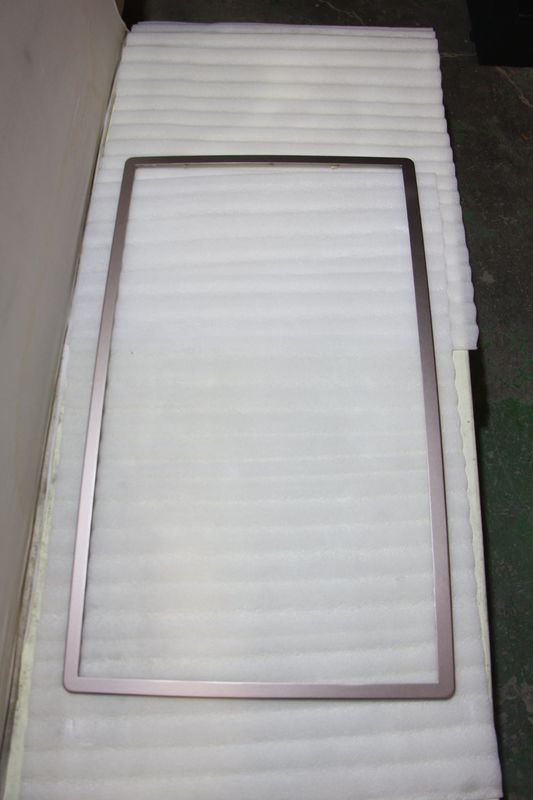
Electroplating CNC Stainless Steel Turning Parts Gloss
Electroplating CNC Stainless Steel Turning Parts Gloss
Place of Origin
Qingdao, China
Brand Name
Chenyang
Certification
CE, RoHS, ISO9001:2015, ISO13485:2016
Model Number
OEM
Product Details
Material:
Aluminum
Transport Package:
Costumer Demand
Trademark:
OEM
Application:
Metal Processing Machinery Parts
Production Capacity:
100000 Pieces Per Month
Surface:
Matte Or Gloss Or Clent's Requirement
Size:
OEM Standard Size
Place Of Origin:
Qingdao China (Mainland)
Processing:
Bending Turning Milling Grinding Machining
Surface Treatement:
Electroplating
Highlight:
Electroplating cnc turning stainless steel
,
cnc turning stainless steel gloss
,
Electroplating stainless steel turning parts
Payment & Shipping Terms
Minimum Order Quantity
20 Pieces
Price
US $2-225 / Piece
Packaging Details
Carton, Plywood box, pallet, upon client's request
Delivery Time
Sample: 3~5 days for no mould items and 7~10 days for mould items Mass goods: 15~20 working days
Payment Terms
L/C, T/T, Western Union, ,
Supply Ability
100000 Pieces Per Month
Product Description
First Glass Manufacturer Stainless Steel CNC Turning Parts, CNC Machining Parts
CNC Face Milling Operation
Material Selection: Begin by selecting the appropriate material for CNC face milling, such as metals, plastics, or composites, based on project requirements.
Tool Selection: Choose the right face milling cutter with the appropriate number of cutting edges, cutter diameter, and insert geometry for the specific material and surface finish requirements.
Workpiece Fixturing: Securely clamp the workpiece onto the CNC milling machine's bed, ensuring it is properly aligned with the machine's coordinate system and parallel to the cutter's path.
CNC Milling Setup: Configure the CNC milling machine by loading the correct CNC program, setting tool offsets, work offsets, spindle speed, and feed rates.
Face Milling Process: Activate the CNC milling machine to engage the face milling cutter, which rotates and removes material from the workpiece's top surface in a smooth, flat, and parallel fashion, achieving the desired surface finish and dimensions.